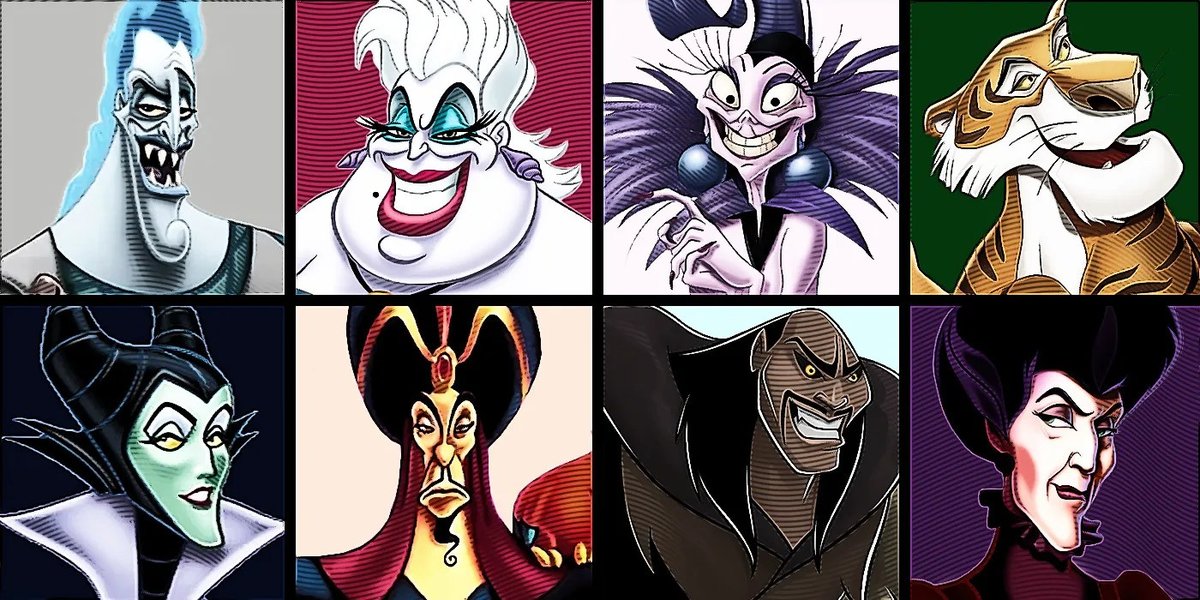
While Disney villains undeniably command attention with their unforgettable fashion and bold transformations—often inspiring elaborate costume designs, as seen with characters like Scar, Ursula, and Cruella de Vil—their captivating aesthetics sometimes overshadow the equally brilliant and deliberate design choices made for the heroes, sidekicks, and supporting characters who aren't trying to scare anyone. Moving Beyond Villains: Disney Characters Designed for Unique Looks (Non-Antagonists), we discover a rich tapestry of visual storytelling where every line, color, and silhouette crafts a personality long before a word is spoken.
These aren't just "good guys" in generic outfits; they are meticulously crafted individuals whose distinct appearances serve the narrative, deepen their character, and leave an indelible mark on our imaginations. Forget the fear-inducing transformations for a moment, and let's appreciate the artistry that gives us characters who are unique, relatable, and utterly unforgettable, all without a hint of malice.
At a Glance: Crafting Unique Non-Antagonist Looks
- Beyond Conventional Beauty: Disney increasingly designs non-antagonists with diverse body types, features, and styles that break traditional molds.
- Visual Storytelling: Every design element—from hair texture to clothing detail—communicates personality, background, and cultural identity.
- Emotional Connection: Unique, sometimes unconventional, looks foster deeper empathy and relatability with audiences, promoting inclusivity.
- Purposeful Design: Character aesthetics aren't arbitrary; they serve narrative functions, showing growth, role, and internal states.
- Cultural Authenticity: Modern Disney animation often draws heavily from specific cultures to create rich, meaningful character designs.
The Unsung Heroes of Design: Why Unique Looks Matter for the Good Guys
It's easy to be drawn to the dramatic flair of a villain. Their costumes often boast sharp angles, dark palettes, and an air of theatricality, designed to instantly convey their threat and power. Yet, the non-antagonists often face a tougher design challenge: how to make them memorable, distinct, and beloved without resorting to overt menace or stereotypical perfection.
The answer lies in nuance, specificity, and a commitment to visual storytelling that extends far beyond mere attractiveness. A hero’s unique look can signal their resilience, their origin, their inner conflicts, or their path to greatness. A sidekick’s quirky appearance can highlight their comedic role or their steadfast loyalty. These aren't just characters; they are carefully constructed visual identities designed to resonate with us on a deeply human level.
The Art of First Impressions: How Animators Define Character Through Appearance
Before a character utters a single line, their design speaks volumes. Animators and character designers employ a sophisticated visual language to imbue non-antagonists with distinct personalities and purposes. This goes beyond just drawing a pretty face; it’s about strategic use of:
- Shape Language: Round shapes often suggest softness, warmth, and approachability (think Olaf or Baymax). Square shapes can imply stability, strength, or stubbornness (like Maui's broad physique). Triangular or angular shapes are frequently used for villains, but can also denote energy, dynamism, or uniqueness in non-antagonists (Merida's wild hair or Esmeralda's sharp features).
- Color Theory: Warm colors (reds, yellows, oranges) can convey vibrancy, passion, or happiness, while cool colors (blues, greens, purples) might suggest calm, mystery, or maturity. A character’s palette often reflects their core personality or emotional arc.
- Costume as Narrative: Clothing isn't just an outfit; it’s a living part of the story. It can indicate social status, cultural background, profession, or even personal transformation. Practical, lived-in clothing might signal humility or adventurousness, while elaborate attire could suggest regality or a journey of self-discovery.
- Facial Features & Expressions: Subtle shifts in eye shape, nose proportion, or mouth lines convey a vast range of emotions and character traits, making even non-human characters feel deeply expressive and relatable.
This intricate design philosophy ensures that every detail contributes to a cohesive, compelling character who feels real and unique.
Beyond the Archetype: Non-Antagonists Who Dare to Look Different
Disney's roster is rich with non-antagonists whose looks break away from conventional norms, proving that distinctiveness often breeds the most enduring appeal.
The Power of the Unconventional Protagonist
These heroes and heroines aren't just different for the sake of it; their unique appearances are integral to their stories and identities.
- Quasimodo (The Hunchback of Notre Dame): Perhaps the most striking example, Quasimodo’s physical deformities are central to his character arc. His "ugly" exterior houses a beautiful soul, challenging perceptions of beauty and otherness. His design is intentionally asymmetrical, with large, expressive eyes that convey his inner kindness and longing. It’s a powerful statement that true heroism isn't about physical perfection.
- Lilo Pelekai (Lilo & Stitch): Lilo is designed with a realistic child's body – not an idealized, slender figure. Her Hawaiian heritage is reflected in her clothing and hair, making her feel grounded and authentic. Her perpetually messy hair and distinct facial features give her an undeniable, quirky charm that sets her apart from typical animated children.
- Merida (Brave): Merida's fiery, untamed red hair is practically a character in itself, symbolizing her wild spirit and refusal to conform. Her athletic build and practical, often plaid, Scottish attire perfectly complement her rebellious, adventurous nature, diverging sharply from the more traditionally elegant Disney princesses.
- Moana (Moana): Designed to be strong and capable rather than delicate, Moana has a muscular, athletic build that speaks to her life on the ocean and her unwavering determination. Her natural, wavy hair and culturally-inspired garments connect her deeply to her Polynesian heritage and her role as a voyager.
- Mirabel Madrigal (Encanto): Mirabel is notable for her glasses, her curly hair, and her unique, embroidered dress that tells the story of her family and her unmagical status. Her distinct look, particularly her glasses, makes her incredibly relatable and signals her role as an observer and connector within her family. She’s not trying to be conventionally glamorous; she’s vibrantly her.
Lovable Oddballs and Unforgettable Sidekicks
Often, it's the supporting characters whose unique designs cement their place in our hearts. Their appearances are crafted to enhance their personalities and their comedic or emotional roles.
- Olaf (Frozen): A snowman born of magic, Olaf’s simple, stick-figure design and carrot nose make him instantly recognizable and endearing. His constantly changing expressions and ability to disassemble himself lend themselves to slapstick comedy, while his innocent, optimistic nature shines through his bright, round features.
- Sven (Frozen): This reindeer, with his dog-like loyalty and highly expressive face, feels like a familiar pet. His simple, robust design allows for a wide range of emotive expressions, making him a hilarious and heartfelt companion despite his inability to speak.
- Pascal (Tangled): Rapunzel's chameleon companion is a masterclass in minimalist design conveying maximum personality. His ever-changing colors and highly expressive eyes allow him to communicate complex emotions and reactions, making him far more than just a pet.
- Genie (Aladdin): A boundless, shapeshifting blue entity, Genie's design is limited only by imagination. His vibrant colors and constantly morphing form embody his magical power and Robin Williams's energetic performance. He's unique because he can be anything, yet always retains his core genial essence.
- Heihei (Moana): Perhaps the most comically incompetent animal sidekick, Heihei's simple, almost vacant design perfectly communicates his utter lack of intelligence. His bug eyes and gangly legs are central to his comedic impact, making him a memorable, if not particularly bright, companion.
Wise Elders and Mystical Mentors
Even characters in guidance roles get distinctive designs that hint at their wisdom, power, or eccentricity.
- Rafiki (The Lion King): The wise, shamanic baboon has a distinctive, almost gnarled appearance, with a long tail and expressive face paint. His design suggests ancient wisdom, connection to nature, and an eccentric, unpredictable spirit that sets him apart from other animals in the Pride Lands.
- Flora, Fauna, and Merryweather (Sleeping Beauty): These three fairy godmothers, with their distinct color palettes and individual, slightly differing body shapes, are easily distinguishable. Their unique designs subtly reflect their individual personalities—sweet, nurturing, and feisty, respectively—while still clearly marking them as a cohesive unit.
Beyond Beauty: The Power of Relatability and Representation
One of the most profound impacts of unique non-antagonist designs is their ability to foster deeper connection and representation. When characters are allowed to look different, they open up new avenues for audience relatability.
Think about characters who might not fit traditional beauty standards, yet their uniqueness makes them all the more beloved. Disney has a history of creating characters who challenge conventional aesthetics, sometimes intentionally designing them to be non-traditionally attractive to emphasize inner qualities or to serve a specific narrative purpose. This intentional departure from idealized beauty can make characters feel more authentic and resonate with a wider audience. For a fascinating dive into how some characters are designed to be unconventional, you might explore articles covering All ugly Disney characters. Often, what might be perceived as "ugly" on the surface serves to highlight the character's depth, journey, or unique charm.
Characters with varied body types, skin tones, hair textures, and facial features allow more children and adults to see themselves reflected on screen. This isn't just about ticking boxes; it's about acknowledging the beautiful diversity of the human experience.
- Tiana (The Princess and the Frog): Set in 1920s New Orleans, Tiana's design is elegant and period-appropriate, yet practical for a hardworking waitress. Her natural hair, realistic proportions, and sophisticated features make her a grounded and aspirational heroine who embodies dedication and dreams.
- Mulan (Mulan): Mulan’s transformation from village girl to warrior is visually striking. Her initial demure appearance gives way to a more practical, battle-ready look that emphasizes strength and determination over traditional femininity. Her design reflects her journey of self-discovery and cultural heritage.
- Encanto's Madrigal Family: This film is a treasure trove of unique character designs, each member distinct. From Luisa’s muscular build to Pepa’s cloud-following hair, every design choice highlights their personality and magical gift, celebrating diversity within a family unit. It's a testament to how specific, varied designs can create a rich, believable community.
Design Choices That Elevate a Character's Story
The magic of Disney character design lies in its intention. No detail is accidental, especially for non-antagonists who need to earn our affection and trust.
- Diverse Body Types and Proportions: Moving beyond a single ideal, Disney now features characters like Maui (larger, muscular), Luisa (strong, athletic), and Baymax (soft, inflatable) whose body shapes are integral to their powers, personalities, and roles. This breadth of representation fosters broader relatability and acceptance of different physiques.
- Hair as an Expression of Self: Hair design has become incredibly sophisticated. Merida's unruly curls symbolize her wild spirit, Rapunzel's impossibly long blonde hair is her magical power and her prison, and Mirabel's curly bob with her glasses grounds her in a relatable reality. Hair isn't just an accessory; it's a character trait.
- Costume as a Living Narrative: Think of Belle's simple blue dress in the village contrasted with her iconic yellow ballgown. The former signifies her intellectual curiosity and outsider status, while the latter marks her transformation and acceptance of her role. Tiana's waitress uniform evolves into a stunning bayou-inspired ballgown, symbolizing her dreams coming true. Costumes narrate without words.
- Emotive Facial Design: Even for animal characters like Pumbaa or Dug, designers imbue them with incredibly expressive faces that convey humor, sadness, and joy, making them feel like complex individuals rather than simple cartoon animals.
Common Misconceptions About "Unique" Character Design
Despite the brilliance, there are often misunderstandings about designing non-antagonists with unique looks.
- Misconception 1: "Unique" Just Means Unattractive.
- Reality: Unique often means distinct, memorable, and reflective of a deeper personality or cultural context. It prioritizes character depth and emotional resonance over generic beauty standards. Quasimodo's unique look makes his inner beauty shine even brighter, while Merida's wild hair embodies her independence.
- Misconception 2: Only Villains Get Interesting Designs.
- Reality: As we've seen, non-antagonists receive just as much, if not more, intricate design attention. Their designs often require more subtlety to convey kindness, bravery, or vulnerability without resorting to overt visual cues of malice or power. The quiet strength of Moana's athletic build is just as compelling as Ursula's dramatic silhouette.
- Misconception 3: Visuals Don't Matter as Much for Non-Antagonists; Story is Key.
- Reality: For Disney, visuals are story. A character's look is the first chapter, conveying personality, background, and emotional state. It builds empathy and understanding instantly, forming the foundation upon which the narrative unfolds. Imagine Maui without his tattoos or Olaf without his simple, expressive face; much of their storytelling would be lost.
How Disney Continues to Innovate in Non-Antagonist Design
The evolution of Disney's character design is a testament to continuous innovation, driven by technological advancements and a growing commitment to diverse storytelling.
With each new film, whether traditional animation or CGI, animators push boundaries. The transition to CGI allowed for unprecedented detail in hair, fabric, and realistic body mechanics, enabling characters like Merida and Moana to have incredibly dynamic and authentic appearances that would have been challenging in 2D. More recently, films like Encanto showcase a profound dedication to cultural authenticity, with character designs meticulously researched to reflect specific regions, clothing, and even historical fashion trends.
Moreover, the increasing diversity within Disney's creative teams means more varied perspectives influencing character creation. This leads to richer, more nuanced designs that break away from traditional archetypes and embrace a wider spectrum of human and fantastical forms, ensuring that future non-antagonists will continue to captivate us with their uniquely crafted looks.
Celebrating Your Own Distinctive Style
Just as Disney characters find strength and identity in their unique looks, there's a powerful lesson for all of us. The most compelling designs aren't about conforming to a singular ideal, but about embracing what makes an individual, well, individual.
Think about the elements that make you unique—your style, your expressions, your way of moving—and how they tell your personal story. Embrace that quirky detail, that distinctive feature, or that personal fashion choice. Just like Disney's beloved non-antagonists, your unique look is an integral part of your narrative, making you memorable, relatable, and utterly authentic. It's a celebration of self, designed by you, for you.
From the quiet strength of Moana to the heartfelt charm of Olaf, Disney's non-antagonists demonstrate that unique design isn't just about aesthetics; it's about deeper storytelling, fostering connection, and celebrating the rich tapestry of individuality. Their looks don't just stand out; they resonate, leaving us with a lasting impression long after the credits roll.