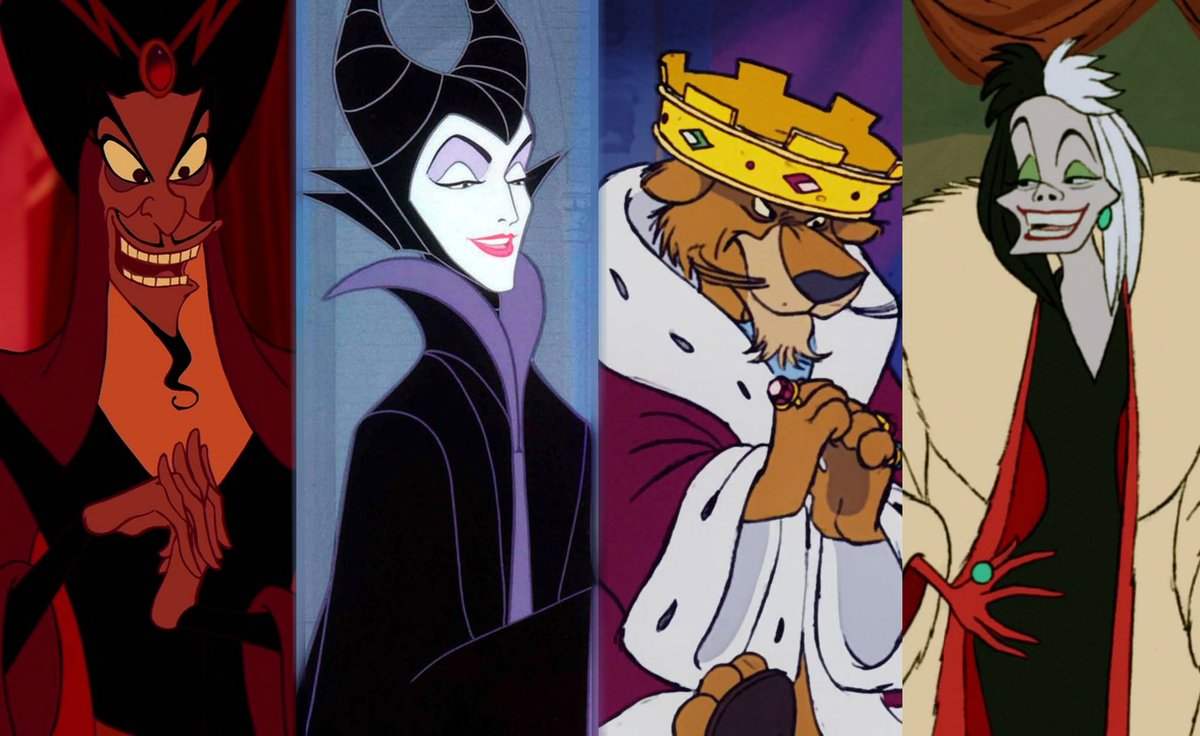
When we think of "ugly" Disney villains, our minds often jump to their gruesome physical attributes—a witch's wart, a sea monster's tentacles, or a lion's scar that tells a story of malice. But what if the real ugliness isn't skin deep? What if it's in the fundamental design of their character itself—their flimsy motivations, their forgettable impact, or their squandered potential that leaves you wondering, "Why were they even there?" In this comprehensive guide, we're diving deep into the ugliest Disney characters, specifically focusing on the Top Disney Villains Ranked by Their Ugliest Designs, not for their physical appearance, but for how truly ugly their overall character design and execution made them within the vast Disney villain pantheon.
Consider this your definitive guide to the villains who are ugly in their very essence, whose narrative flaws make them stand out for all the wrong reasons.
At a Glance: Unpacking Narrative Ugliness
- Beyond Aesthetics: This ranking redefines "ugly" from physical appearance to ineffective character design, weak impact, and unrealized potential.
- The Criteria: Villains are assessed on their motivations, execution of their schemes, screen presence, and lasting legacy.
- Why It Matters: Understanding these "ugly" designs highlights what not to do when crafting a truly compelling antagonist.
- Expect Deep Dives: Each villain receives a breakdown of why their character design ultimately fell flat, leaving an 'ugly' stain on their film.
The True Face of Villainous Ugliness: When Design Falls Apart
Disney has given us some of the most iconic antagonists in cinematic history: Maleficent's chilling elegance, Scar's cunning treachery, Ursula's theatrical grandeur. These villains, regardless of their physical beauty or lack thereof, are beautifully designed in their effectiveness, their clear motivations, and their indelible mark on their stories. They pose genuine threats, drive compelling narratives, and their presence lingers long after the credits roll.
But then there are the others. The ones whose potential was squandered, whose motivations were paper-thin, or whose presence was so negligible they might as well have been furniture. This is the 'ugliness' we're dissecting today. It's the 'ugly' of a poorly thought-out plan, the 'ugly' of a character who feels like an afterthought, and the 'ugly' of a twist that doesn't earn its surprise. When we talk about these villains, we're not critiquing the animator's brushstrokes, but the storyteller's pen. We're looking at the fundamental flaws that made these characters, despite their potential, narratively grotesque and ultimately forgettable. They're a testament to how even in the magical world of Disney, effective character design principles are paramount.
Let's count them down, from merely disappointing to truly dreadful.
Ranked: The 10 Ugliest Disney Villains by Character Design and Impact
This list isn't about the villains who look scary or unappealing. It's about those whose character design—their narrative function, their motivations, and their overall impact on the story and audience—was so poorly executed it made them truly 'ugly' in the grand tapestry of Disney villainy.
10. Edgar - The Aristocats (1972): The Clumsy Inheritor
Edgar Balthazar, Madame Bonfamille's unassuming butler, kicks off our list not because he's physically repulsive (he's quite standard), but because his villainy is astonishingly clumsy and ill-conceived. His entire scheme revolves around eliminating Duchess and her kittens to inherit his employer's fortune sooner.
Why His Design is 'Ugly': Edgar's 'ugliness' lies in his utter ineffectiveness. He's easily outsmarted and defeated by a band of cats, often becoming the butt of slapstick humor rather than a genuine threat. His motivation—simple greed—is clear but shallow, failing to offer any real depth or complexity. Despite expressive animation and voice acting, his potential as a villain is completely unrealized, leaving him feeling less like a cunning antagonist and more like a bumbling obstacle. His grand scheme is foiled with such ease that it makes you wonder if he even deserved to be called a villain in the first place.
9. Alameda Slim - Home on the Range (2004): The Yodeling Yawner
In a film already struggling for critical acclaim, Alameda Slim emerges as a villain whose 'ugliness' is defined by his profound boredom. This former farmhand uses hypnotic yodeling to steal thousands of cattle, selling them off to buy land under an alias. His goal is to drive his former employers out of business.
Why His Design is 'Ugly': Slim's villainous plan, while unique in its method (hypnotic yodeling), suffers from an unclear ultimate goal for the purchased land, making it feel pointless. More critically, he lacks any real intimidation factor. He's repeatedly outsmarted and knocked unconscious by the bovine protagonists, diminishing his threat level to comical irrelevance. His personality is flat, and his presence fails to inject any meaningful conflict or excitement into the narrative. He's a villain whose design evokes more yawns than gasps.
8. Kron - Dinosaur (2000): The Grumpy, One-Note Leader
Kron, an Iguanodon, leads a desperate herd across a desolate landscape to the Nesting Grounds in Disney's Dinosaur. His 'survival of the fittest' mentality clashes with the compassionate Aladar, setting him up as a natural antagonist.
Why His Design is 'Ugly': Kron's 'ugliness' stems from his lack of development. He's essentially a grumpy, authoritarian leader with a singular, rigid worldview. While his philosophy creates conflict, his character rarely moves beyond this basic archetype. We never truly understand why he's so unyielding, or what internal struggles he might face. This one-dimensionality prevents him from fully realizing the potential of a social Darwinist villain. He's less a complex antagonist and more a stubborn force of nature, rendered visually impressive but narratively shallow.
7. Bill Sykes - Oliver & Company (1988): The Forgettable Loan Shark
Drawing from a classic literary villain, Bill Sykes in Oliver & Company is a loan shark in New York City, using his imposing Dobermans to enforce debts. He targets Fagin and later attempts to exploit the wealthy Foxworth family through Oliver.
Why His Design is 'Ugly': Sykes' character design is 'ugly' due to its sheer genericism and lack of impact. He makes little impression because of limited screen time and a portrayal that feels indistinguishable from countless other crime bosses in other films. Compared to more iconic versions of the character from Oliver Twist, Disney's Sykes feels undercooked and unmemorable. He's a plot device rather than a fully fleshed-out villain, his menace more implied by his dogs than by his own characterization. He barely registers as a threat, ultimately getting a rather unceremonious and forgettable end.
6. Prince Hans - Frozen (2013): The Twist That Fell Flat
Prince Hans of the Southern Isles initially presents himself as Princess Anna's charming savior, only to be revealed as a power-hungry schemer who intends to eliminate Elsa and seize Arendelle's throne.
Why His Design is 'Ugly': Hans' 'ugliness' is the result of a twist villain design that ultimately falls flat. His sudden reveal as evil is criticized for lacking sufficient foreshadowing; his earlier actions portray him as genuinely kind and brave, making his heel turn feel unearned and contradictory. His villainous dialogue post-reveal often sounds forced, and his motivations (being the youngest of 13 brothers seeking a throne) feel underdeveloped, a simplistic explanation for a jarring shift in personality. The twist prioritizes shock over narrative cohesion, leaving audiences feeling manipulated rather than surprised by a truly compelling antagonist.
5. Bellwether - Zootopia (2016): The Late-Game Letdown
Dawn Bellwether initially appears as Mayor Lionheart's meek, put-upon assistant. She's later unmasked as the criminal mastermind behind a plot to make predators go savage, aiming to instill fear in prey species and enable prey dominance.
Why Her Design is 'Ugly': Bellwether shares Hans' flaw of being a poorly executed twist villain. Her late-stage reveal limits her ability to make a significant impression as an antagonist throughout the bulk of the film. Crucially, there's insufficient foreshadowing to make her motivations or her earlier interactions with Judy Hopps feel anything but arbitrary once her true nature is exposed. Her meek exterior, while meant to be deceptive, ultimately contributes to her forgettability as a villain before the reveal. The impact of her evil is diluted by her limited screen time as an overt antagonist, making her narrative role feel less like a cunning mastermind and more like a convenient plot device.
4. Governor Ratcliffe - Pocahontas (1995): The Monolithic Monomaniac
Appointed by King James I, Governor Ratcliffe leads the Virginia colony of Jamestown. His singular drive is greed and ambition, believing the native Powhatan tribe hoards vast amounts of gold.
Why His Design is 'Ugly': Ratcliffe's character design is 'ugly' due to its extreme one-dimensionality. He is defined solely by greed, a trait he embodies so completely that he lacks any other discernible personality traits or complexities. While villains can certainly be greedy, Ratcliffe's portrayal offers no nuance, no inner conflict, and very little in the way of charisma or even comedic relief (despite attempts) that might make him compelling. In a film attempting to address serious themes of cultural conflict, Ratcliffe's flat, cartoonish villainy feels out of place and detracts from the narrative's depth, making him less of a memorable antagonist and more of a predictable obstacle.
3. Marina Del Rey - The Little Mermaid: Ariel's Beginning (2008): Ursula's Understudy
Serving as governess to King Triton's daughters, Marina Del Rey harbors resentment over her position, desiring to usurp Sebastian as Triton's royal advisor. Her primary motivation becomes stopping Sebastian and enforcing Triton's ban on music.
Why Her Design is 'Ugly': Marina's 'ugliness' in design is twofold: her small-scale, basic goals and her overwhelming lack of originality. Her desire to be a royal advisor is a petty ambition that pales in comparison to the grand stakes of other Disney villains. More damagingly, her design, complete with electric-eel henchmen (Benjamin and Flo), too closely resembles Ursula from the original Little Mermaid. This mimicry, combined with her shallow personality, makes her instantly forgettable and ununique, marking her as a cheap imitation rather than a distinct threat in one of Disney's lesser Disney sequels. She's a clear example of a villain designed without imagination or genuine purpose.
2. King Magnifico - Wish (2023): The Wish-Waster
King Magnifico, the sorcerer who founded the magical kingdom of Rosas, requires residents to surrender their deepest wishes on their 18th birthday, occasionally granting a non-threatening few. When Asha discovers his true, controlling intentions, Magnifico rapidly descends into dark magic to maintain his power.
Why His Design is 'Ugly': Magnifico's character design is 'ugly' for its glaring inconsistencies and narrative weaknesses. His personality is remarkably flat, never truly conveying the depth or charisma that would make his initial popularity believable. His rapid descent into dark magic, while a narrative shortcut, robs him of any significant escalation of threat; he's suddenly a full-blown evil sorcerer without a compelling journey. His villain song, intended to be a powerful anthem, was poorly received, further diminishing his impact. He's a villain whose potential for nuanced exploration of control versus hope is entirely squandered, leaving behind a bland and unconvincing antagonist whose menace feels unearned.
1. Sarousch - The Hunchback of Notre Dame II (2002): The Apex of Anemic Antagonism
At the top of our list, claiming the crown for the 'ugliest' villain character design, is Sarousch from The Hunchback of Notre Dame II. He leads the Cirque de Sarouch, a traveling carnival that doubles as a group of thieves. His plan is to steal a valuable gemstone and a gold-covered bell from Notre Dame Cathedral.
Why His Design is 'Ugly': Sarousch is the epitome of boring, one-dimensional villainy. He is characterized solely by greed, vanity, and egotism, yet none of these traits are explored with any depth or given a compelling twist. He never poses a serious threat to the heroes, making his schemes feel inconsequential and his presence utterly ineffectual. His motivation is simplistic, his methods are uninspired, and his overall impact is so negligible that he becomes a truly forgettable antagonist. He's a villain designed without passion, creativity, or even the basic elements needed to drive a conflict. Sarousch isn't just ineffective; his character design is a narrative void, making him the 'ugliest' Disney villain because he offers absolutely nothing of value to his story or the audience.
Why 'Ugly' Villains Matter (Even When They Don't)
While it's easy to dismiss these "ugly" villains as mere missteps, their existence actually serves a crucial purpose in understanding classic Disney villain archetypes. They are cautionary tales in character design. They highlight how a lack of clear motivation, an unconvincing power dynamic, or a poorly executed narrative twist can completely undermine an antagonist's role, turning potential menace into narrative wallpaper.
A villain's job is to create conflict, challenge the hero, and drive the story forward. When their character design fails in these fundamental aspects, the entire film suffers. These 'ugly' villains teach us that a truly great antagonist isn't just about looking menacing; it's about being narratively purposeful and emotionally resonant, even in their evil. They show us what happens when storytellers lose sight of what makes a villain truly compelling.
Spotting the Signs of a Subpar Scoundrel
As you watch future films, you'll start to notice the patterns that lead to an 'ugly' villain design. Keep an eye out for these red flags:
- Vague or Generic Motivations: "I want power," "I want money," or "I'm just evil" without any deeper exploration or personal stakes.
- Lack of Genuine Threat: The villain's schemes are easily foiled, or they rarely put the heroes in real, believable danger.
- Flat Personality: No discernible traits beyond their primary villainous goal; no moments of vulnerability, cunning, or unexpected humor that add depth.
- Underdeveloped Backstory: While not every villain needs an elaborate origin, a complete absence of context for their actions can make them feel arbitrary.
- Inconsistent Power Levels: Their abilities wax and wane to suit the plot, rather than being a consistent force the hero must genuinely overcome.
- Twists Without Foreshadowing: A sudden reveal of evil that feels unearned and contradicts earlier characterization, leaving the audience feeling cheated.
- Copycat Designs: Villains who feel like direct, less-effective imitations of stronger antagonists from other, more iconic films.
Recognizing these elements helps you appreciate the skill and thoughtfulness required to create a truly memorable antagonist, the kind that elevates a story rather than dragging it down.
Crafting Compelling Conflict: The Path to Villainous Greatness
So, if these are the pitfalls, what's the secret to crafting a truly compelling antagonist? It comes down to intentional, thoughtful character design that ensures the villain is as vital to the story as the hero.
- Clear, Relatable (Even if Twisted) Motivations: Villains like Scar or Frollo have deep-seated, personal reasons for their actions that, while evil, make sense within their own twisted logic.
- Genuine Threat and Stakes: The audience must believe the villain poses a real danger and that failure for the hero carries significant consequences.
- Complex Personalities: Great villains often have charisma, a warped sense of justice, or even moments that hint at their humanity, making them more than just a caricature.
- Active Role in the Narrative: They drive the plot, creating obstacles and pushing the hero to grow, rather than passively waiting to be defeated.
- Memorable Presence: Whether through iconic dialogue, a distinct visual style, or a powerful theme, they leave a lasting impression.
- Earned Twists: If a villain is a twist, ensure subtle clues are woven throughout the narrative, making the reveal satisfying upon rewatch, not just surprising.
The evolution of Disney's animated canon shows a clear trend towards more nuanced antagonists, moving away from purely archetypal evil to explore darker themes and more complex characters. When done right, even a physically unappealing villain can be narratively beautiful, leaving us eager to revisit their schemes time and again.
Your Turn: Who's Your Least Favorite Villain?
We've dissected the 'ugliness' of Disney's most ineffective villains, looking beyond their outward appearance to the very core of their character design. From clumsy butlers to generic loan sharks, these characters serve as stark reminders that a memorable villain requires more than just a devious plan—it demands depth, impact, and a clear purpose.
Which of these "ugly" villains do you find the most forgettable, or perhaps, the most frustratingly ineffective? Is there an antagonist you feel belongs on this list, whose character design truly failed them and their film? Share your thoughts and join the conversation about what truly makes a Disney villain—or any antagonist—narratively 'ugly'.